Storm damage repair means pulling the wet material first: saturated underlayment, torn roofing felt, and debris sitting in your valleys. Then we dry the roof deck before any shingle goes back. Wet decking rots, and rot turns a small repair into a full replacement.
Money gets saved by timing more than by bargaining. A tarp and a new run of ice-and-water shield cost far less than replacement decking, and catching a hairline crack in the flashing early keeps water out of your attic insulation.
For our summers and Nor'easters, we refit with architectural shingle rated for high wind, lay ice-and-water shield along the eaves and valleys, and reseal chimney and step flashing with fresh mastic. Drip edge, gutter, downspout, and fascia get checked before we call it done.
- Ice-and-water shield runs along the eave and through the valley, where melting snow refreezes into an ice dam and backs water up under the shingles.
- Chimney flashing and step flashing get hand-sealed with fresh mastic, because those joints fail first when wind drives rain sideways.
- A roof inspection covers fascia, soffit, gutter, and downspout, so storm debris does not clog the run and pond water at the eave.
- Repairs to the roof deck follow local building code, so plywood or OSB sheathing gets fastened with the right nail and screw spacing.
- We document what we find for your insurance claim, with line-item scope an adjuster can check against the storm date.
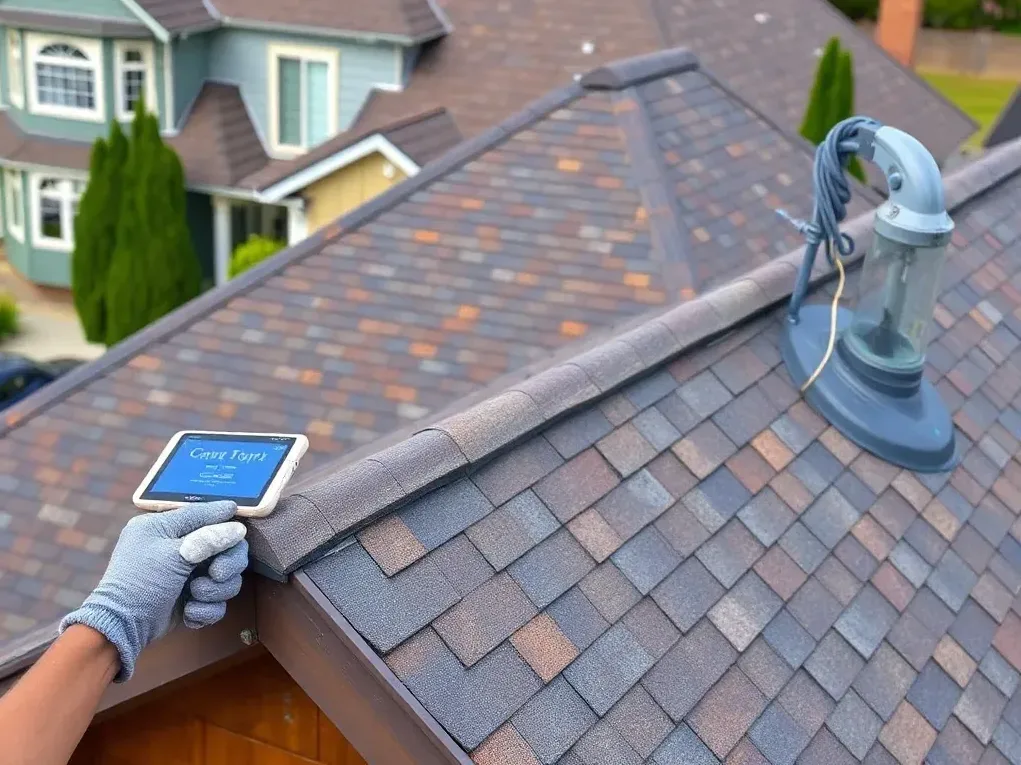
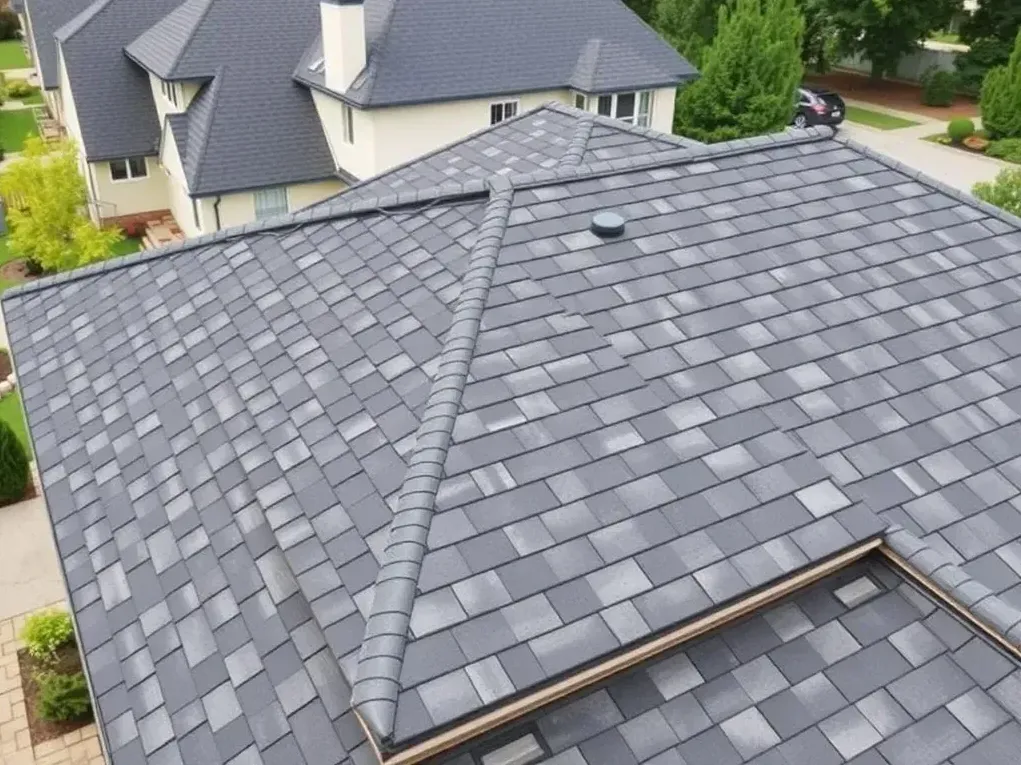
- On a hip or gable roof we inspect ridge cap, ridge vent, and every pipe boot and vent boot, since a cracked boot leaks straight into insulation.
- A dormer or skylight adds another valley and a set of step flashing, which is where a lot of leak calls begin.
- Tear-off is pry bar and roofing shovel work, fastening runs a nail gun off an air compressor, and a torch only comes out for modified bitumen.
- Counter-flashing, drip edge, and apron flashing carry the waterproofing, not the field course of shingles out in the open.
- On a flat roof, coping and scupper drains get cleared, and parapet walls get resealed so ponding water has somewhere to go.
- Concrete tile, clay tile, and wood shake each need different fasteners and a different walk, so the roof estimate lists what your roof actually has.
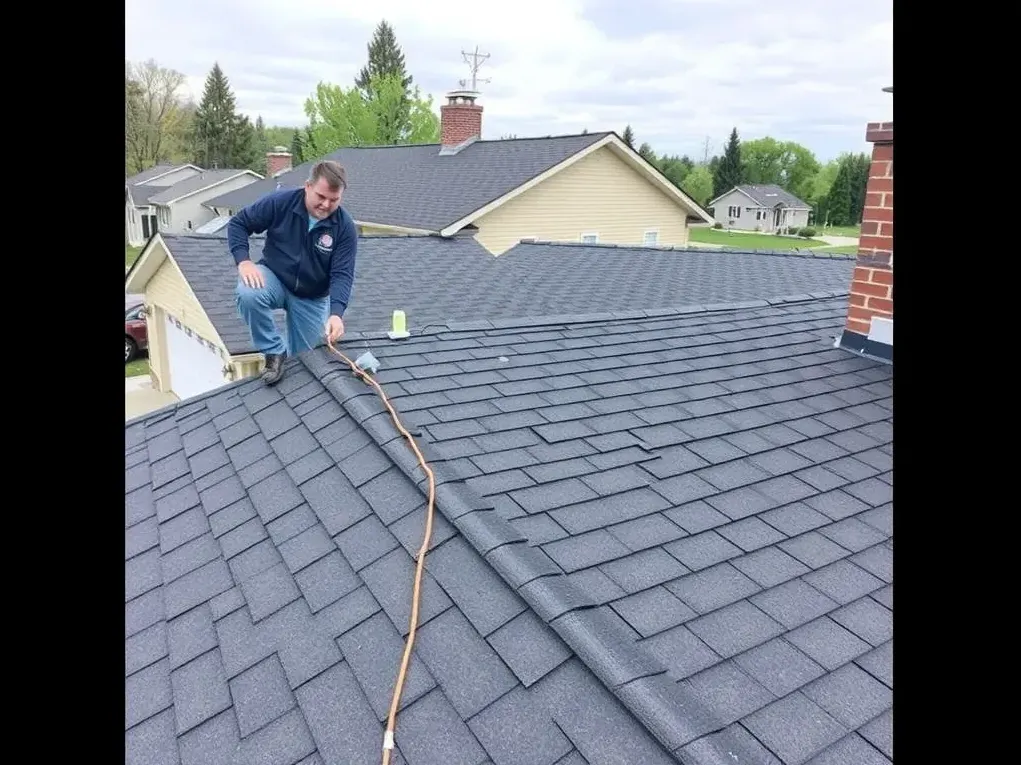
- Roofline and rooftop get read from the street first; a roofer who never climbs up is guessing about the substrate under your shingles.
- Truss, rafter, joist, and ridge beam stay hidden above the ceiling, so we check them from the attic after any storm that lifts shingles.
- Under a metal panel roof, the batten, counterbatten, and purlin grid gets checked for loose fasteners before anyone touches the panels.
- We work off ladder and scaffold with a safety harness, keep the dumpster in the driveway only on tear-off days, and use roof cement and mastic where the manufacturer calls for them.
- A coating or sealant can buy a flat roof a few more years, but caulk over a pulled snow guard or a loose anchor is not weatherproofing.