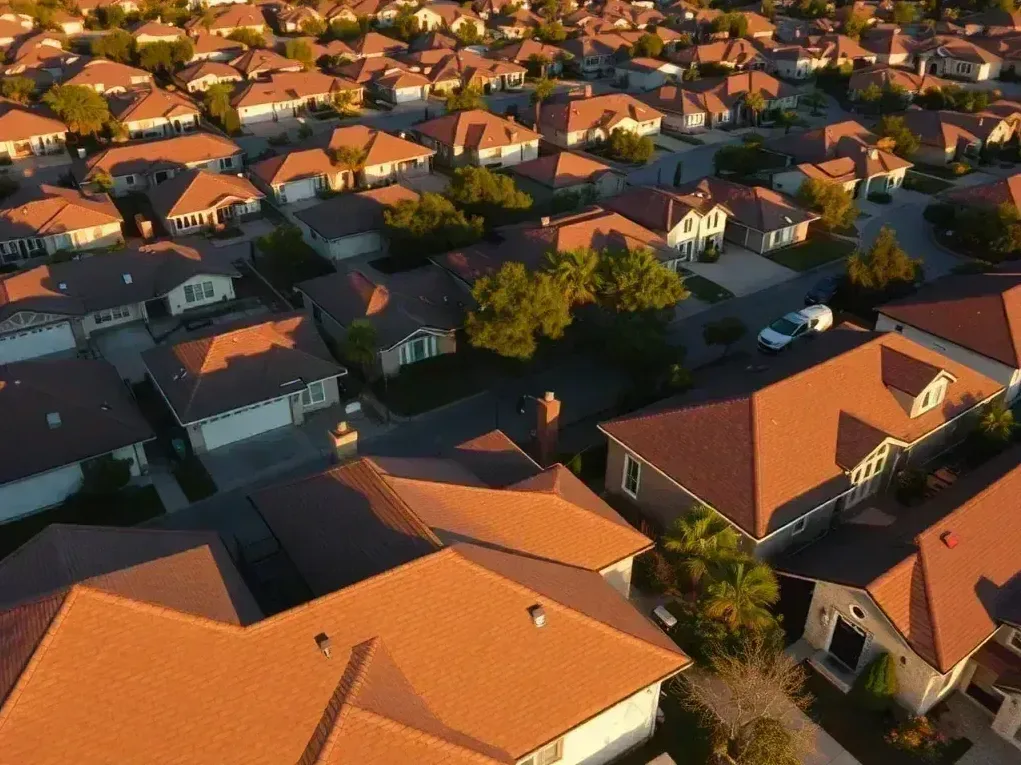
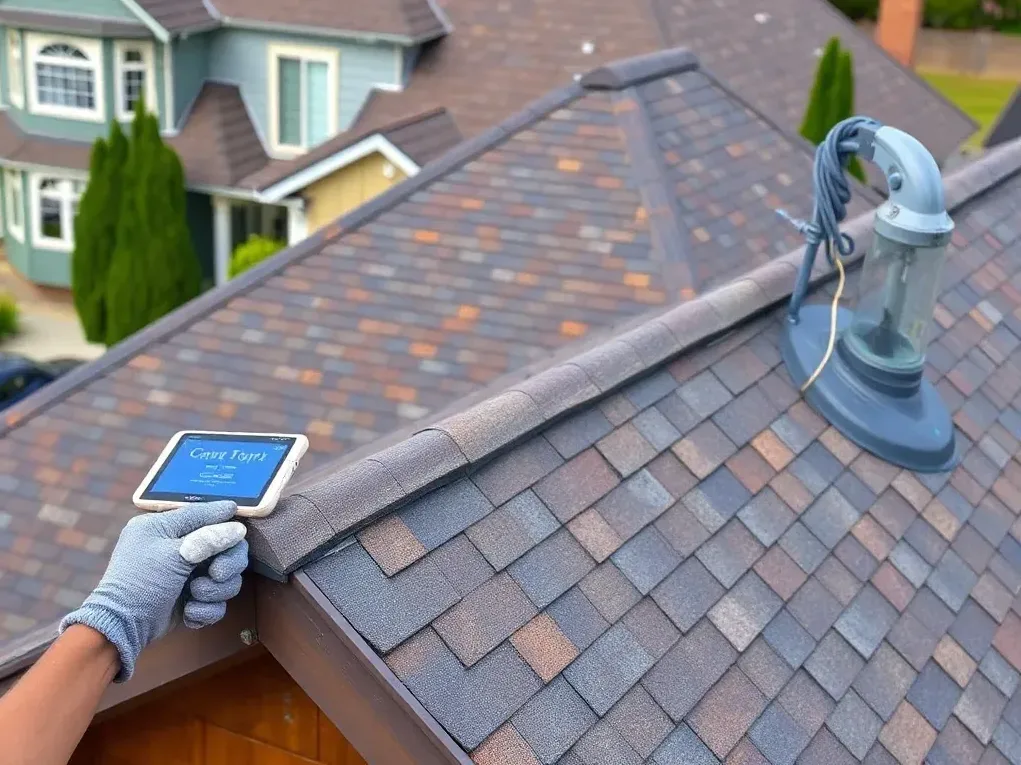
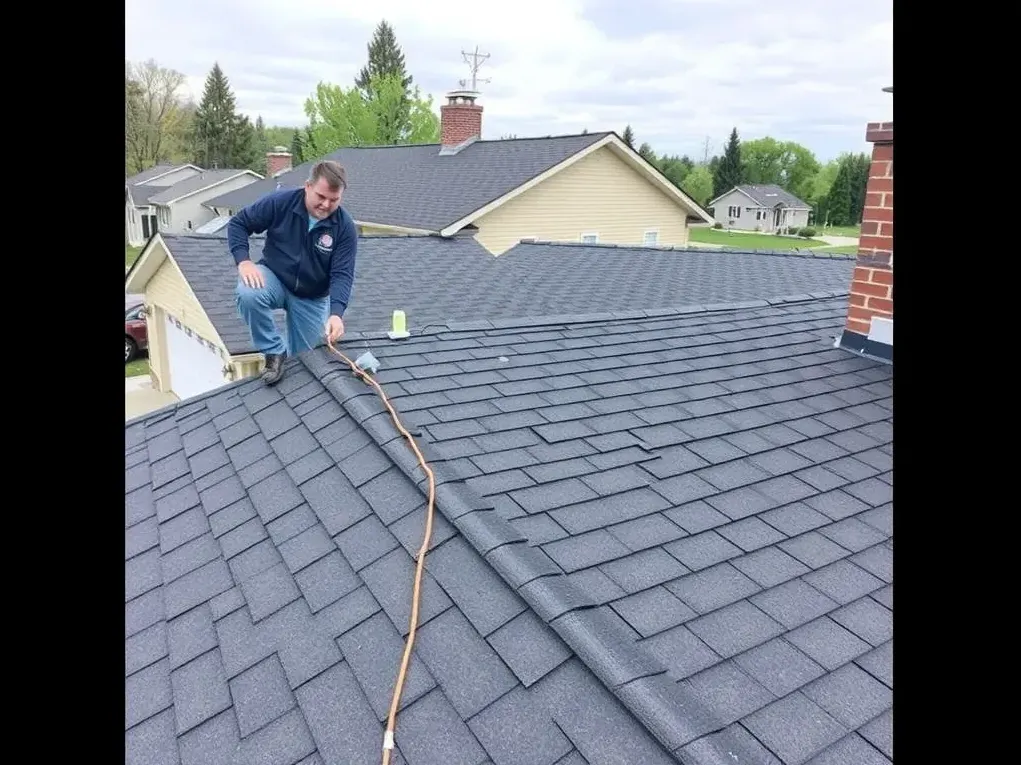
A commercial roof is a low-slope assembly, not a house roof stretched wide. We open with a roof asset survey: square footage, drain locations, and where the membrane has already blistered or peeled.
System selection drives the 15-to-30-year warranty terms. TPO and PVC membrane are heat-welded single-ply sheets, EPDM is rubber, and modified bitumen is a torch-down or self-adhered layer over an existing built-up roof.
We schedule around tenants so the building stays open. Scaffold and safety harness go up, debris lands in a dumpster, and every fastener pattern matches South Brunswick's building code before we leave for the day.
- TPO membrane is a white heat-welded single-ply that reflects summer sun and resists hail better than an aged built-up roof.
- EPDM is a black rubber single-ply that tolerates ponding water on a low slope draining slowly toward a scupper.
- Modified bitumen arrives as a torch-applied or self-adhered sheet that can recover right over a gravel-surfaced built-up roof.
- PVC membrane handles grease and chemical fallout near kitchen exhaust fans and rooftop equipment.
- Metal panel and standing-seam panel with concealed fasteners suit a mansard, gambrel, canopy, or awning section.
- Silicone or acrylic roof coating buys years on a membrane that has oxidized but has not failed yet.
- Rigid insulation and tapered insulation add R-value and pitch water toward the drain instead of letting it settle.
- Ridge vent, soffit vent, and an attic fan keep ventilation moving so a hot humid summer does not cook the roof deck.
On a building with steep-slope accents, we match what is there: asphalt shingle in architectural shingle or three-tab shingle profiles, wood shake and cedar shake on older structures, and slate, clay tile, or concrete tile where the architecture calls for it.
Corrugated panel covers equipment screens. Synthetic underlayment and an ice-and-water shield go under every valley, because an ice dam forms fast when snow and ice accumulate and refreeze at the eave.
We measure the pitch on every section and note where tar, asphalt, or old bitumen has been smeared over a leak instead of repaired.
Felt, roofing felt, and tar paper from a previous layer get removed down to the substrate instead of buried under a new one. Trapping moisture is what rots a roof deck.
- Decking and substrate: we lift a pry bar on the plywood or OSB sheathing and check for rot before quoting a recover.
- Flashing: step flashing in the valley, apron flashing at the eave, boot flashing and pipe boot at the vent boot, counter-flashing and coping at the parapet, and chimney flashing at the chimney.
- Sealant work around a skylight, dormer, or pipe flashing, plus mastic and roof cement where a caulk joint has pulled loose.
- Gutter and downspout runs, where debris and granule loss collect and push water back up under the drip edge.
- Fascia and soffit along the eave, rake, and verge, where water wicks in and paint flakes off.
- Structural members, including truss, rafter, joist, ridge beam, purlin, batten, and counterbatten, checked for sag and decay.
- Vapor barrier and waterproofing under a low deck, where condensation rots the substrate from underneath.
- Snow guard, anchor points, and weatherproofing along the roofline, which take the worst of a Nor'easter.
A roofing square and a nail gun running off an air compressor do most of the work, once a roofing shovel and pry bar strip the old field course. We also flag any overdriven nail or stripped screw in the decking.
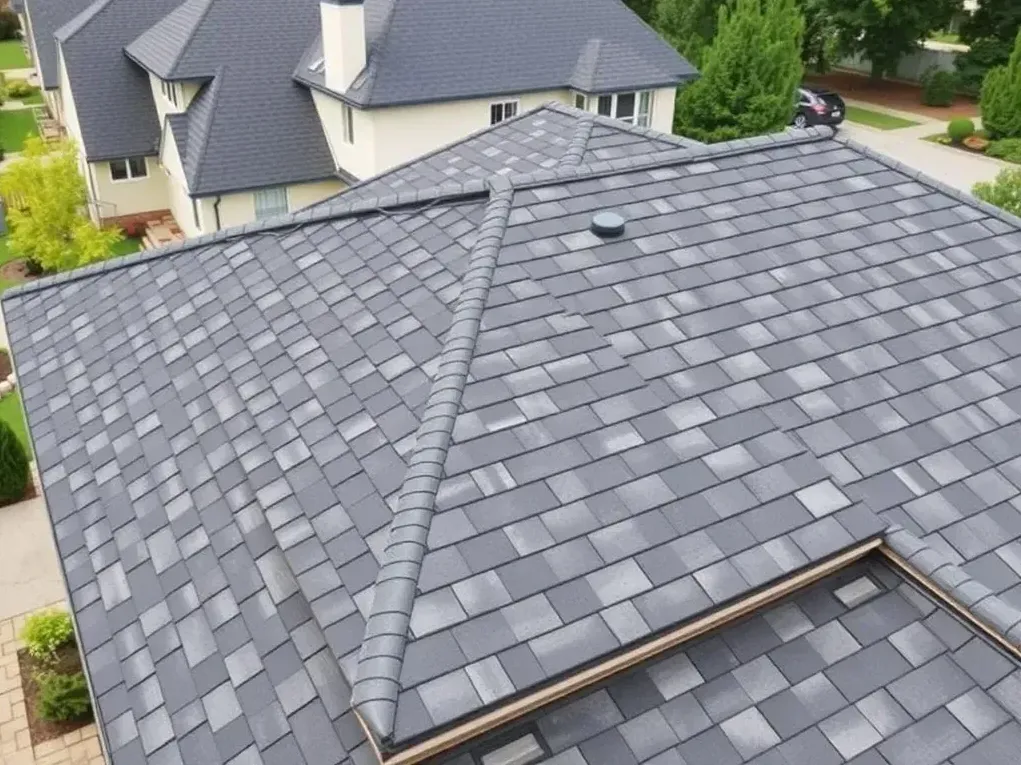
On the ridge, hip, and gable ends we check the ridge cap and the overhang, since that is where wind uplift starts.
Every roof inspection ends with a written roof estimate broken into line items, so you can see what the membrane costs against what the flashing costs. Call 732-466-1707 and we will walk the roof with you.